Introduction
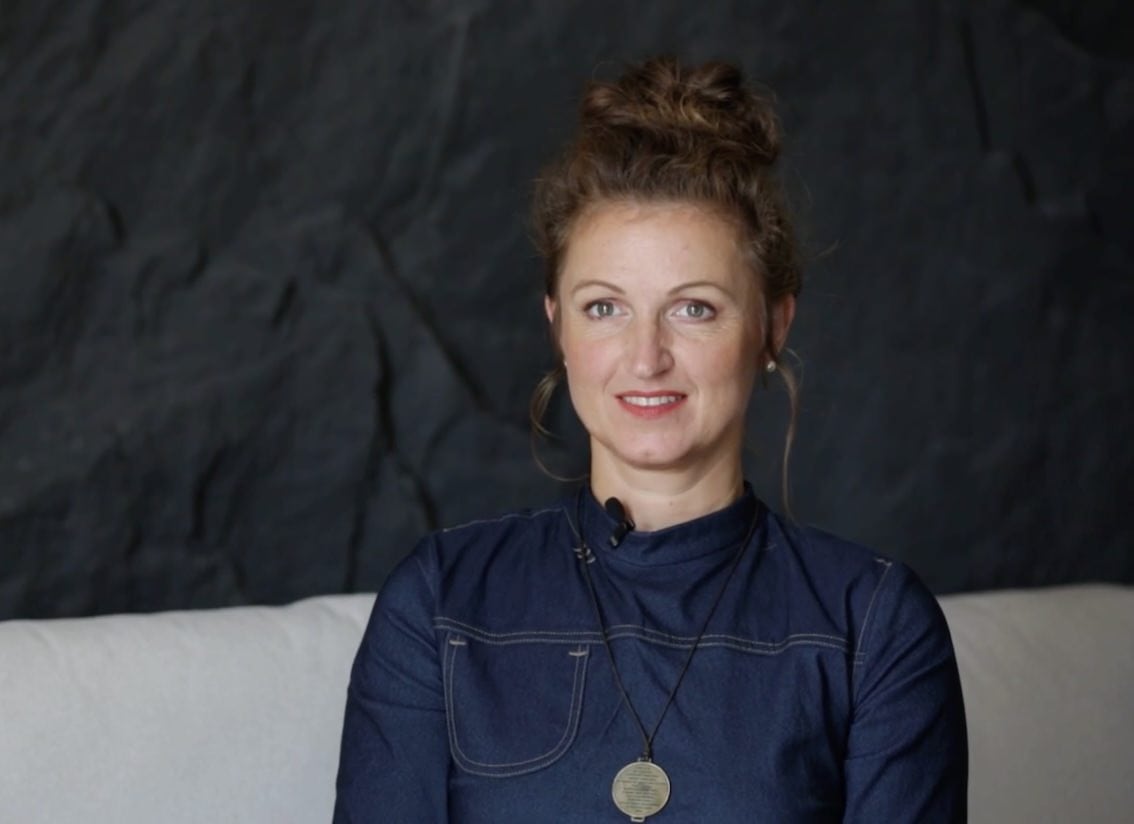
When Lisa Maria tells you she used to be shy, you pause.
Not because it’s hard to believe, but because it makes everything that follows so much more powerful.
Today, Lisa is a licensed therapist; during this filming, she was an RMT coach-in-training and a woman whose story reads like a roadmap of transformation. But the path here? It was anything but conventional.
Raised between religious divides. Drawn to punk rock rebellion. Schooled in interdisciplinary psychology. Tempered by trauma. And now, rewired by the fire of coaching.
This isn’t just a story about changing careers.
It’s about changing how you show up for your life.
A Childhood of Opposites
Lisa was raised between two religious forces: Mormonism and the Salvation Army.
“They were constantly in conflict,” she remembers. “So that naturally led me to really have to think deeply about religious doctrines and come up with my own narrative.”
That internal tension—between tradition and inquiry—ignited something bigger: empathy and rebellion.
By high school, she was a punk rocker, head full of Viktor Frankl and Man’s Search for Meaning, spinning records and questioning everything.
“I was drawn to existential philosophy and to Zen Buddhism. There was this thread of deep critical thinking that just wouldn’t go away.”
A Life That Listens
Long before she became a therapist, Lisa noticed something uncanny.
“People would always want to talk to me,” she said. “Like, I’d be sitting at a bus stop and someone would come over and pour their heart out.”
It was like life was telling her: You’re here to listen. You’re here to help people figure out their lives.
But figuring out her own path was still unfolding.
The Punk Rocker Becomes a Counselor
Lisa spent over a decade working in libraries. Books were safe. Predictable. Always within reach.
But the whisper to do more—to go deeper—kept calling.
Then came Jenny Craig.
Yes, Jenny Craig.
“As a weight-loss counselor, I realized—I’m not here for this. I need to be coaching or doing therapy. I need to help people on a deeper level.”
She considered coaching, briefly. Looked at Co-Active Coaching. But it didn’t quite fit.
Then she remembered Tony Robbins.
Rediscovering a Mentor from the Past
Lisa had admired Tony Robbins in her early 20s. She’d listened to the tapes. Felt the energy. But she’d also felt the stigma—especially in academic circles.
“Some people thought he was a fake. Others were die-hard fans,” she says. “So I kept it quiet.”
She immersed herself in advanced psychotherapy training, systems thinking, and holistic approaches to psychology. She earned her master’s in Counseling Psychology with a focus on integrative healing.
Still, coaching called.
And eventually, the call got loud enough that she couldn’t ignore it anymore.
The Block: Shyness and Self-Doubt
Despite her training and intelligence, something kept Lisa from stepping into coaching fully.
“Shyness was one,” she admits. “But the bigger thing was self-belief.”
She had grown up in a family impacted by alcoholism. The result?
“Severe trauma. Complex childhood trauma.”
Lisa didn’t seek traditional therapy for herself. Instead, she relied on years of personal growth work, spiritual practice, and the support of mentors to help her heal what she now calls her “core wound.”
“I was told, ‘Your light shines. You have something to give.’ And I believed it.”
That shift was everything.
The Breakthrough: From Therapist to Bold Coach
Lisa is still a licensed therapist. But these days, she’s living the transition.
“I tell my clients: psychotherapy, true psychotherapy, is an act of rebellion. We’re going to help you become the person you want to be. And that might not match social norms.”
Through Robbins-Madanes Training life coach certification program, she’s found something she didn’t know she was looking for: permission to be bold.
“I watch Tony in the videos and I think—he’s doing the thing I want to do. He’s using his whole self.”
Lisa isn’t just studying techniques. She’s absorbing a way of being.
Why She Chose Coaching (And What It’s Giving Her)
Lisa now refers to her therapy practice as “therapy with a coaching edge.”
Many of her clients don’t need to dwell on the past anymore—they need action, vision, momentum.
And coaching gives her something therapy can’t:
- Freedom from insurance limitations
- The ability to work across state lines
- Long-term relationships without red tape
- Creative flexibility and full-spectrum transformation
She’s not giving up therapy. But coaching is the future.
“I want to retire from therapy. I want to coach from my camper van by the beach.”
What’s Unleashed Now
Since starting the Core 100 life coaching program, something has shifted.
“I’ve moved from introvert to ambivert,” she says with a grin. “I’ve stepped into boldness.”
The tools in the training? They help. But what really moved her wasn’t the content—it was the model.
“To see Tony use his whole body, his full presence… it gave me permission to be fully myself.”
And being herself means being rebellious.
“I keep mentioning Tony, but I need to say Cloe too. Cloe’s a therapist. She gets it. And what they’re doing together is a revolution.”
Her Message to Therapists
Lisa is passionate about encouraging other therapists to make the leap.
“I want more therapists to become coaches,” she says. “It’s liberating.”
She sees therapy being overused—just like medication. And she believes coaching is the missing bridge.
“When you’ve done the past work, and someone’s ready to move forward—that’s where coaching comes in. That’s where the real momentum begins.”
If You’re Shy, Here’s What She’d Tell You
“Go for it.”
Lisa says if someone had told her that coaching would help her overcome shyness, she would’ve started years ago.
“I didn’t know that. But I do now.”
She believes coaching doesn’t just help clients. It changes the coach too.
A Future with Two Tracks
When asked about the future, Lisa gives two answers:
One for if the world goes smoothly.
And one for if it doesn’t.
“I want a beach house on the Oregon coast,” she says. “I want to travel in my van and coach people from wherever I am.”
But if the economy takes a turn?
“Then I want to be of service. Coaching becomes even more important when things get hard. We help people pivot, rebuild, and believe again.”
Her Final Message
“Keep going. The best is yet to come. And follow your heart.”
Ready to Follow Your Heart?
Join our free 5-day life coach training to learn how to become a coach. Like Lisa says, you don’t need to be perfect to begin. You just need to say yes to yourself. 👉 Watch the Free Series Now